


Renqiu Aochen International Co., Ltd
Your garage floor probably takes more abuse than any other floor in your home.
Cars drive over it every day. Oil and dirt accumulate on the surface. Tools get dropped, bicycles get dragged around, and heavy equipment is constantly moved from one place to another.
Over time, even a solid concrete floor can become stained, cracked, dusty, and difficult to keep clean.
So, what's the best garage flooring solution?
The answer depends on how you use your garage, your budget, and how much installation work you're willing to do yourself.
Some homeowners prefer a permanent coating. Others want something they can install over existing concrete without hiring contractors. And for people who want a practical combination of durability, appearance, and easy installation, interlocking garage floor tiles are worth considering.
Let's compare 11 popular garage flooring options and look at what really matters before making a decision.
Before comparing materials, think about the problems your garage floor needs to solve.Based on common garage flooring concerns, here are five important factors:
- Resistance to daily wear: Can it withstand vehicle traffic, foot traffic, tools, and everyday use?
- Easy cleaning: Can you remove dust, dirt, oil stains, and other common garage messes without too much effort?
- Installation: Can you install it yourself over an existing concrete floor?
- Appearance: Will it make your garage look cleaner, more organized, and more attractive?
- Maintenance and repair: If one section becomes damaged, can you repair or replace it without redoing the entire floor?
Not every flooring material performs equally well in these areas.
11 Popular Garage Flooring Options Compared
1. Garage Floor Paint
Garage floor paint is one of the most affordable ways to improve the appearance of bare concrete.
It creates a new surface color and helps reduce concrete dust. However, ordinary floor paint may peel, scratch, or wear away under repeated vehicle traffic and exposure to chemicals.
Best for: Budget-conscious homeowners who mainly want a quick cosmetic improvement.
Things to consider: Surface preparation is important, and repainting may be necessary over time.
2. Epoxy Garage Floor Coating
Epoxy is a popular garage flooring solution because it creates a hard, continuous surface with a clean, professional appearance.
It can provide good resistance to abrasion, stains, and many common chemicals when properly formulated and installed.
However, installation usually requires thorough concrete preparation, including cleaning, repairing cracks, and sometimes grinding. Curing time and installation conditions also matter.
Best for: Homeowners looking for a seamless, permanent-looking garage floor.
Things to consider: Installation can be time-consuming, and damaged coatings may require more extensive repairs.
3. Rubber Garage Floor Mats
Rubber mats offer cushioning and help protect the original concrete surface.
They are particularly useful in garages where people spend time standing, exercising, or working on vehicles.
However, large rubber mats can be heavy, and dirt or moisture may accumulate underneath them if the floor is not cleaned regularly.
Best for: Workspaces, home gyms, and areas where cushioning is important.
4. Carpet Tiles
Carpet tiles provide a softer surface and can improve comfort in garages used as hobby rooms or multipurpose spaces.
Individual tiles can often be replaced when damaged.
However, carpet is not the most practical option for garages exposed to water, oil, mud, and vehicle-related dirt.
Best for: Converted garages and hobby spaces with limited exposure to moisture and oil.
5. Self-Adhesive Vinyl Tiles
Self-adhesive tiles are relatively easy to install and come in various colors and patterns.
Their main limitation is that adhesive performance depends heavily on the condition of the concrete and installation environment.
Heavy vehicle traffic, temperature changes, and moisture can cause some products to loosen or lift.
Best for: Light-use garages and decorative flooring projects.
6. EVA Foam Interlocking Tiles
EVA tiles are lightweight, soft, and easy to assemble.
They are comfortable underfoot and useful for exercise areas or children's play spaces.
However, EVA foam is generally not the first choice for garages where cars are regularly parked. Heavy loads and vehicle tires can cause deformation, depending on the product construction.
Best for: Home gyms and light-duty recreational spaces.
7. Vinyl Garage Floor Rolls
Vinyl flooring rolls provide a relatively continuous surface with fewer joints than individual tiles.
They are available in different patterns and finishes and can cover large areas efficiently.
However, installation requires accurate cutting and positioning. Large rolls can also be difficult to handle, and damaged sections may be harder to replace.
Best for: Homeowners who prefer a continuous decorative floor covering.
8. PP Interlocking Garage Floor Mats
A Practical Choice for DIY Garage Flooring
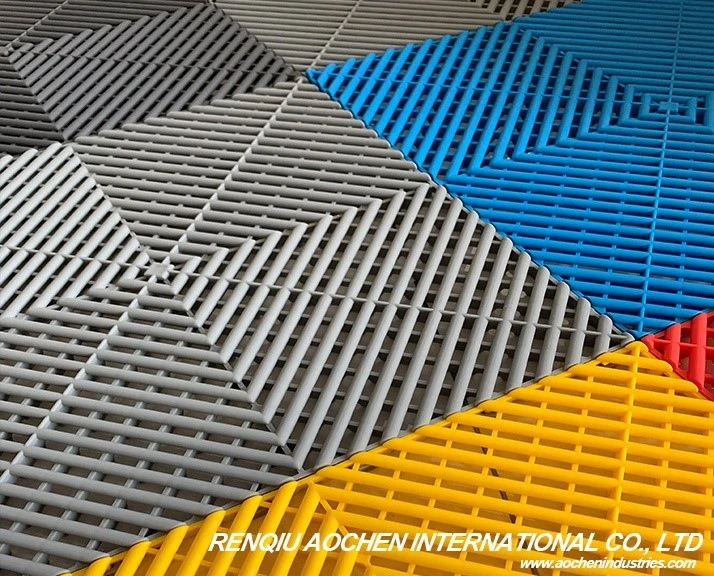
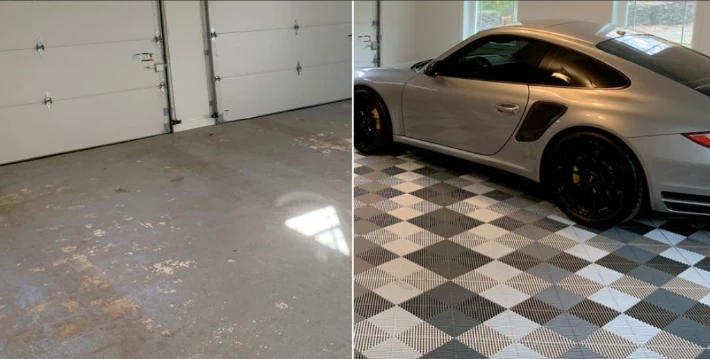
If you want to improve your garage floor without going through the complicated process of applying a coating, PP interlocking garage floor mats are an option worth considering.
Made from polypropylene (PP), these rigid modular tiles connect through an interlocking system, allowing individual pieces to be assembled into a larger flooring surface.Unlike paint or epoxy, there is no need to apply a coating directly to the concrete.
Why do homeowners consider this solution?
- DIY-friendly installation: The interlocking design makes assembly straightforward without specialized flooring contractors.
- Modular construction: Tiles connect together to create a continuous flooring layout.
- Flexible layout: Individual tiles can be arranged, removed, or replaced when needed.
- Improved appearance: Different colors and patterns can help create a cleaner, more organized garage.
- Easy maintenance: The modular surface can be cleaned, and individual tiles can be lifted when access to the underlying floor is needed.
- Suitable for garage applications: Properly designed PP tiles can be used in areas exposed to regular foot traffic and vehicle traffic, subject to their load-bearing specifications.
One important point: Not all interlocking garage tiles are the same. Material quality, tile thickness, structural design, connection strength, and load-bearing performance all influence how well they perform.
Before purchasing, check whether the product is designed for vehicle use rather than assuming every plastic interlocking tile can support a car.
Best for: Homeowners who want a modular, attractive garage floor with a relatively simple DIY installation process.
9. Rubber Garage Floor Tiles
Rubber tiles provide cushioning, sound absorption, and a comfortable walking surface.
They are useful in garages that double as workshops or exercise areas.
However, rubber products vary significantly in hardness, density, chemical resistance, and load-bearing capacity. Some rubber surfaces may also be affected by oil or certain automotive chemicals.
Best for: Workshops, exercise areas, and garages where comfort and impact absorption are priorities.
10. Polyurea Garage Floor Coating
Polyurea coatings are another option for homeowners seeking a durable, seamless garage floor.
They can offer excellent flexibility, abrasion resistance, and chemical resistance depending on the formulation.
However, professional installation and proper surface preparation are important. The initial investment can also be higher than simpler flooring solutions.
Best for: Homeowners seeking a professionally installed, seamless floor.
11. Polished Concrete
Polished concrete improves the appearance of an existing concrete floor through mechanical grinding and polishing.
It offers a clean, modern appearance and is relatively easy to maintain.
However, it does not necessarily solve problems such as existing cracks, deep oil stains, or the desire for a softer surface.
Best for: Homeowners who prefer a minimalist, industrial-style garage.
| Flooring Type | DIY Installation | Main Advantage | Main Limitation |
|---|---|---|---|
| Floor paint | Yes | Low initial cost | Can peel or wear |
| Epoxy coating | Moderate | Seamless finish | Preparation and curing |
| Rubber mats | Yes | Cushioning | Mats may shift |
| Carpet tiles | Yes | Comfort | Not ideal for oil and moisture |
| Self-adhesive tiles | Yes | Simple installation | Adhesion concerns |
| EVA tiles | Yes | Soft and lightweight | Not ideal for heavy vehicle loads |
| Vinyl rolls | Moderate | Continuous coverage | Difficult to replace sections |
| PP interlocking tiles | Yes | Modular and practical | Load capacity varies |
| Rubber tiles | Yes | Cushioning and durability | Material-dependent performance |
| Polyurea coating | Usually professional | Durable coating | Higher installation requirements |
| Polished concrete | Usually professional | Clean, hard surface | Does not cover every existing defect |
At AOCHEN, we focus on manufacturing flooring and rubber products for different commercial and residential applications.
Our PP Interlocking Garage Floor Mats offer a modular flooring option for customers looking for an alternative to traditional garage floor coatings.
For importers, wholesalers, distributors, and flooring suppliers, we can discuss product specifications, colors, dimensions, packaging, and order requirements according to your market needs.
Whether you are developing a new garage flooring product line or looking for a supplier for your existing business, choosing the right product starts with understanding how your customers will use it.
Have a garage flooring project or sourcing requirement?
Contact AOCHEN to discuss PP interlocking garage floor mats and available customization options.Website:https://www.aochenrubber.com/
Email:sales@aochenrubber.com

diverse product portfolio
years experience
product performance certifications
customer repurchase rate
